 Ketchikan City Guide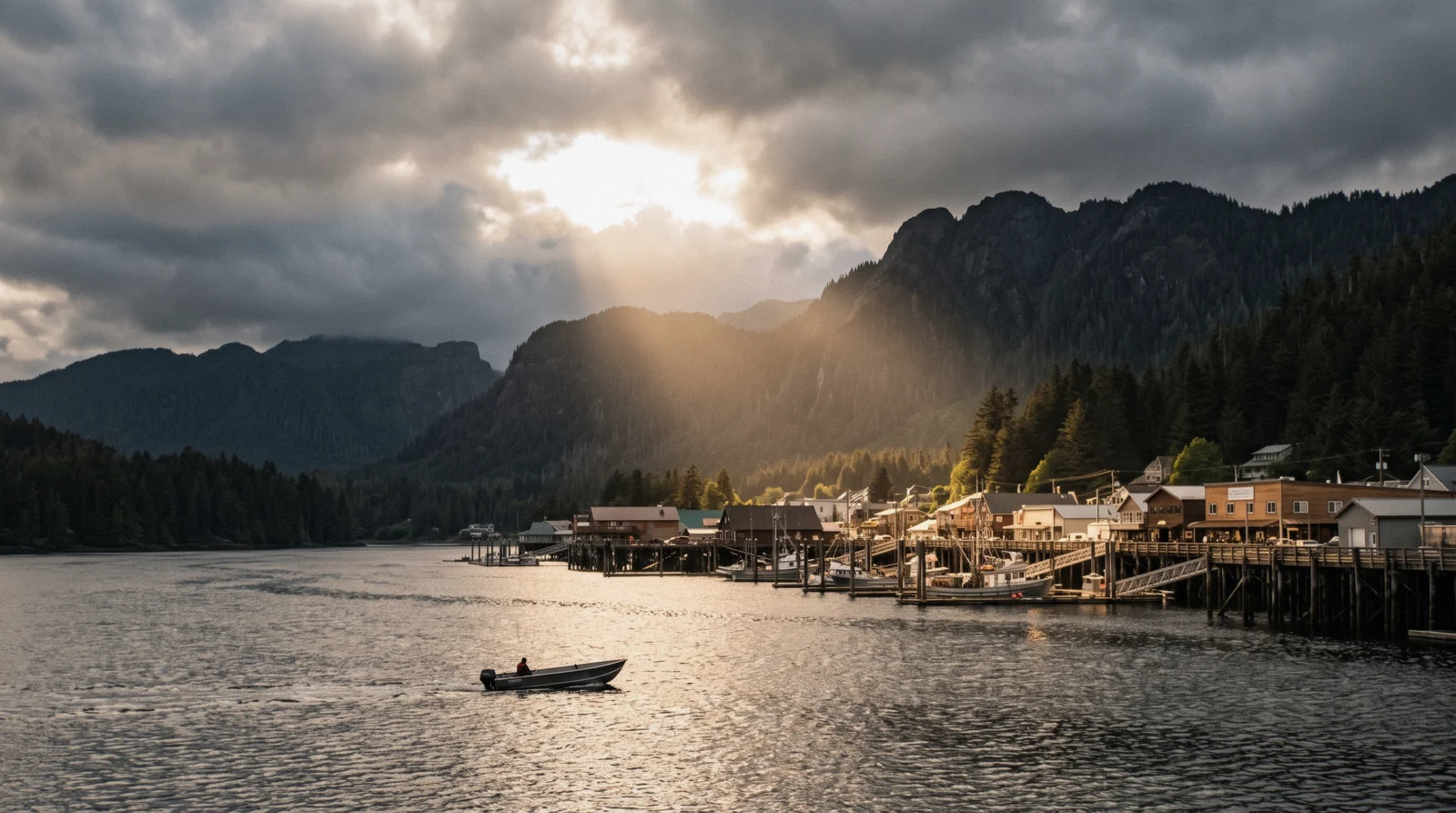
Best Time to Visit Ketchikan, Alaska: Which Month to Come
Best time to visit Ketchikan, Alaska comes down to one trade-off. June is the driest month in the NOAA climate normals. August is the warmest month and the peak of the salmon run in Ketchikan Creek. Both fall inside the cruise season, so both carry crowds. This page sets the figures against each other, walks through the season shape, and names the months for quiet, for weather and for fish. Start with the short answer, then dig into Ketchikan weather if you want the full tables. The town all of this sits in is the rest of the Ketchikan guide.
Quick answer A figure-first verdict with the key trade-off and links for each travel style
Pick June if dry weather matters most. June averages 7.02 inches of rain, the lowest monthly figure in the 1991-2020 NOAA normals for Ketchikan. Pick August if you want the warmest air at 59.0°F average and spawning salmon in Ketchikan Creek, which the Alaska Department of Fish and Game says peaks in July and August. Both months sit in the peak cruise season, when up to five ships can share the downtown waterfront on one day. For smaller crowds and lower sales tax, look at the shoulder months of May and September instead. See the full comparison and the fishing calendar before you book.
Key takeaways
- June is the driest month at 7.02 inches of rain, so plan around weather patterns rather than hope.
- August pairs the year's warmest average of 59.0°F with the salmon peak described on the fishing page.
- The cruise season runs roughly May to September with a June to August peak of up to five ships a day.
- Shoulder months cost less at the register, since the city sales tax drops after September, per Ketchikan costs.
The short answer: late June for most people
If you made us pick one month, it is June. The 1991-2020 NOAA climate normals give June 7.02 inches (178 mm) of rain, the lowest monthly figure of the year, against an annual normal of 149.54 inches. July is close behind at 7.33 inches. June's average temperature is 55.3°F (12.9°C), and daylight runs to about 17 hours 27 minutes at the summer solstice. You still need rain gear. The same normals record measurable precipitation on roughly 16.4 days in an average June, and 232.6 days across the year.
If you want fish instead of dry skies, pick August. It is the warmest month at 59.0°F (15.0°C) average, and the Alaska Department of Fish and Game describes spawning Chinook and coho filling Ketchikan Creek each July and August, viewable from the Creek Street bridges and on the Forest Service's underwater camera.
If you want the opposite of peak season, come in the winter months. January is the coldest month at 35.6°F (2.0°C), October the wettest at 18.37 inches of rain. The town is quiet, some attractions cut hours, and the combined sales tax drops to 5.5%. The full month-by-month figures sit on the Ketchikan weather page.
Every month, scored
Rain and mean temperature are the NOAA 1991-2020 normals for the Ketchikan airport station. The verdict column is the cruise calendar and the sales-tax table, not opinion.
| Month | Rain | Mean temp | The verdict |
|---|---|---|---|
| January | 16.17 in | 2.0°C | Town only, cheapest tax rate, shortest days |
| February | 11.80 in | 2.3°C | Town only, museums and trails open |
| March | 10.98 in | 3.3°C | Town only, last month at 5.5% tax |
| April | 10.25 in | 6.4°C | Tax rises to 8%, first ships late in the month |
| May | 8.68 in | 10.1°C | Season opens, Discovery Center goes daily |
| June | 7.02 in | 12.9°C | Driest month, long daylight, shoulder of peak |
| July | 7.33 in | 14.9°C | Peak, salmon in the creek, five ships a day |
| August | 11.30 in | 15.0°C | Peak and warmest, rain climbing back |
| September | 14.30 in | 12.0°C | Ships thin out, rain over 14 inches |
| October | 18.37 in | 7.9°C | Wettest month, season over, tax drops |
| November | 17.07 in | 4.3°C | Second wettest, town only |
| December | 16.27 in | 2.4°C | Dark, wet, 7 hours of daylight |
Daylight runs from 17 hours 27 minutes at the June solstice to 7 hours 5 minutes at the December solstice. Figures current for Q3 2026.
The cruise season: May to September, peaking June to August
Ketchikan's cruise season runs roughly May through September. The peak months are June, July and August, when up to five ships can be in port on the same day. Trade reporting for the coming season counts 58 scheduled cruise calls, up from 48 the previous season, with the city projecting more than 1.6 million cruise passengers. The City of Ketchikan publishes the day-by-day schedule with passenger capacities as a PDF, and the Visitors Bureau keeps its own cruise calendar, so you can check exactly which days hit five ships before you fix your dates.
The shape of the season matters more than the total. On a five-ship day, the four downtown berths fill and the atmosphere on Front Street and Creek Street changes with each gangway. Berths I through IV run south to north along the downtown waterfront, and a second dock at Ward Cove, about 7 miles north, adds Norwegian Cruise Line Holdings ships with a free 20-minute shuttle into town.
Outside the peak, the town is different in both directions. Early May brings the first calls and a town shaking off winter hours. Late September thins out fast, and tour operators wind down with the ships. If you want Ketchikan with elbow room, the first and last two weeks of the season are the window. The cruise port page covers the berths, the shuttle and the daily schedule in detail.
June versus August: dry versus warm and fishy
These are the two strongest months, and they win for different reasons. June takes the rain contest outright: 7.02 inches (178 mm), the year's lowest monthly normal. August gives back 11.30 inches (287 mm), nearly double, and September climbs again to 14.30 inches. Measurable precipitation falls on about 16.4 days in June and 16.8 days in August, so August does not rain many more days, it rains harder when it does.
August takes the temperature contest. Its 59.0°F (15.0°C) average edges July's 58.8°F and beats June's 55.3°F. Four degrees sounds small, but on a dry afternoon it is the difference between a jacket and none.
The salmon decide the rest. ADFG's Ketchikan Creek viewing page names Chinook and coho as the species in the creek and gives May through September as the general viewing window, peaking in July and August. Anglers chase those same runs, and the saltwater fishing around Ketchikan is in full swing by August. The fishing page covers seasons and charters.
Our verdict: choose June if your plans are built on flightseeing, hiking or any activity where low clouds and heavy rain cost you the day. Choose August if seeing salmon, bears at the weir or catching fish is the point of the trip, and you accept wetter days as the price. Full normals are on the Ketchikan weather page.
Shoulder months and the winter town
May and September are the smart traveler's months. May averages 8.68 inches of rain, drier than every month except June and July, with an average of 50.1°F. September runs 14.30 inches and 53.6°F. Both sit at the edges of the cruise season, so the waterfront is busy but not packed, and tour availability is easier than at the July peak.
Money favors the shoulder and winter too. Alaska has no state sales tax, and the City of Ketchikan's combined city plus borough rate runs 8.0% from April 1 through September 30, dropping to 5.5% from October 1 through March 31. On meals, gear and souvenirs, the off-season rate is measurably cheaper. More figures are on the Ketchikan costs page.
Winter is quiet but not shut. The Totem Heritage Center drops to afternoons on weekdays from October through April, while it opens 8am to 5pm daily from May through September. The Southeast Alaska Discovery Center goes free from October through April after charging $5 in season. Creek Street stays walkable year round as a free public boardwalk, and Totem Bight State Historical Park opens 7am to 6pm all year for a $5 day-use fee. The things to do in Ketchikan page lists what runs in each season, and what does not.
What needs booking ahead and what does not
In peak season, book the small-seat activities early. The Misty Fjords floatplane carries just six passengers per departure, and similar limits apply across Ketchikan tours. Bear viewing, flightseeing and the smallest-group tours are the first to sell out on multi-ship days. Most tours in the catalogue carry a 24-hour cancellation deadline, so a booking made weeks ahead is not a big risk if your ship's schedule holds.
Book later or not at all for the big-seat items. Coach and trolley city tours with dozens of seats routinely have space, and the free attractions need no booking at all. Creek Street is a public boardwalk, Married Man's Trail is a public trail, and Totem Bight's $5 day-use fee is paid at the park, open 7am to 6pm year round.
In May, early September and winter, booking pressure drops across the board. The shoulder months trade a bit of choice for walk-up availability. Where a page in this guide says a price or schedule is not published by the operator, that is worth taking seriously. Check current availability on the tour catalogue before you travel.
What each season is actually for
Four trips that answer a different month: the flight when the cloud lifts, the bears at the hatchery run, the culture any day, and the meal when it is wet. Prices and ratings are the platform’s own figures.
 from $389
Small group
from $389
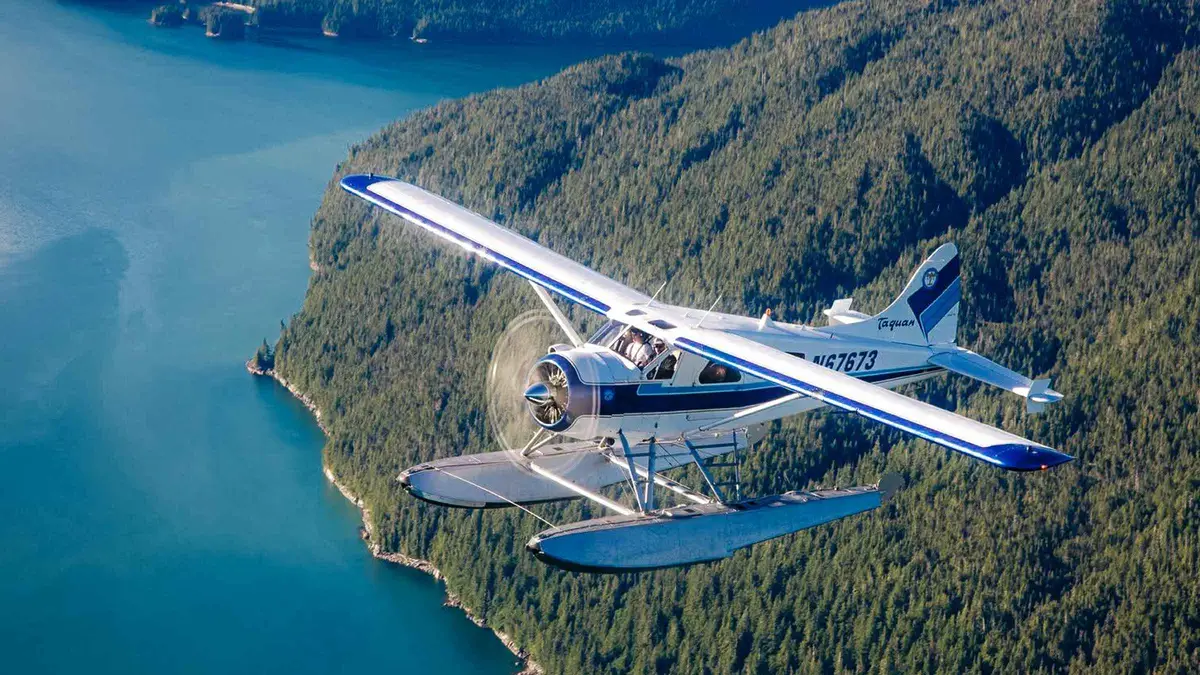
Small group Ketchikan: Misty Fjords National Monument Floatplane Tour
A six-passenger floatplane lifts off from Ketchikan for a low flight over Misty Fjords National Monument, with the pilot narrating the route by headset. Good for travelers who want an aerial view of the fjords and forest without a long day on the water.
Check Availability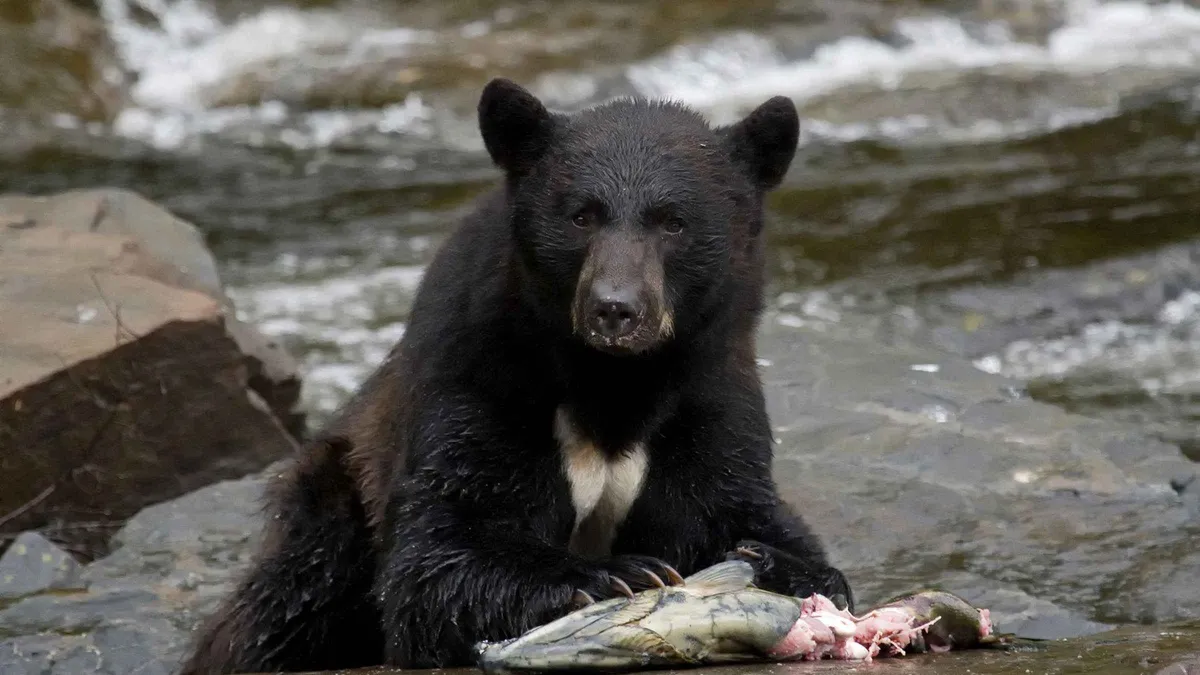 from $399
Free cancellation
from $399
Free cancellation Ketchikan: Neets Bay Black Bear Viewing Tour with a Cruise
A van and speedboat combination carries small groups to Neets Bay, where forest trails lead to platforms overlooking a salmon stream favored by black bears. Suited to visitors comfortable with a five-hour outing that mixes a boat ride with walking on uneven trails.
Check Availability from $84
Free cancellation
from $84
Free cancellation Ketchikan: Alaska Native Cultural and Scenic Shore Excursion
A Native-guided van tour run by Clan House Tours stops at four wildlife viewpoints and Totem Bight State Historical Park to cover Haida, Tlingit and Tsimshian history and craft. Fits travelers who want cultural context alongside a chance at spotting bears, salmon and eagles.
Check Availability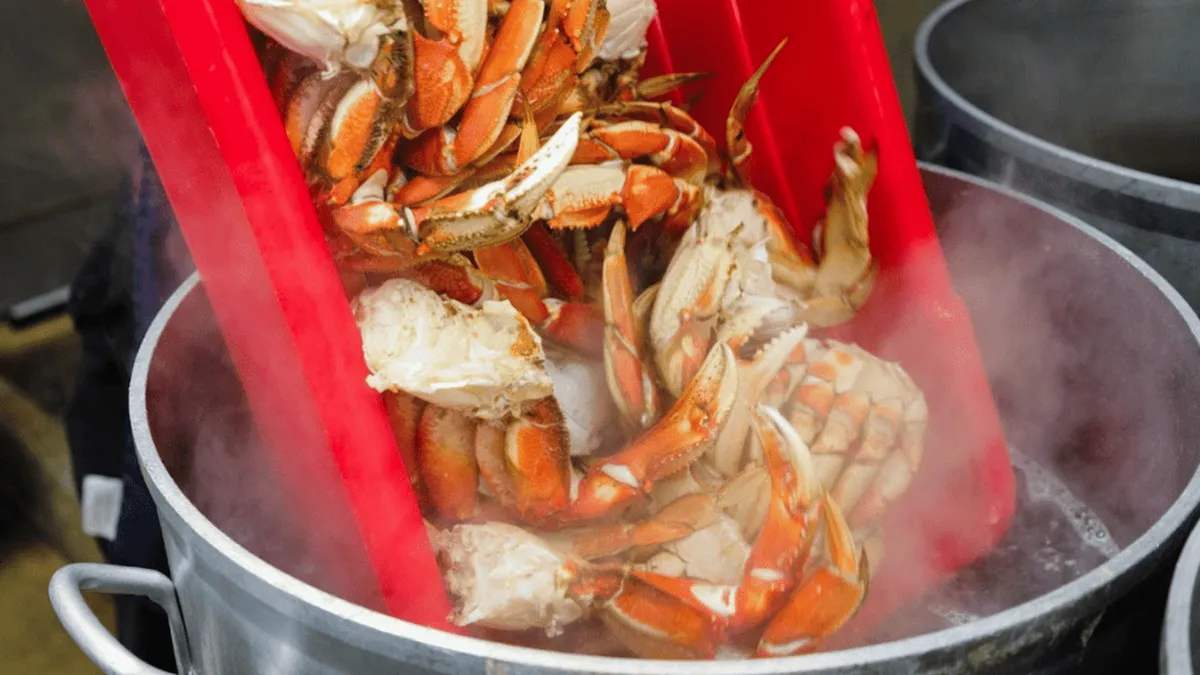 from $109.95
Meal included
from $109.95
Meal included From Ketchikan: Crab Feast Lunch at World-Famous Lodge
A coach ride south of town leads to George Inlet Lodge for a three-course lunch built around steamed Dungeness crab, with a host sharing stories about the old cannery building. Best for visitors who want a sit-down meal rather than a wildlife excursion.
Check AvailabilityPrices, ratings and details are the platform's own. dollar figures are the listed prices — the platform bills in your account's currency.
Next
Weather and rain
The full climate normals and what 149 inches feels like: Ketchikan weather.
The data behind this pageThe cruise port
How many ships share your day and where they tie up: the Ketchikan cruise port.
What peak season meansBest time to visit Ketchikan: questions
Which month has the least rain in Ketchikan?
June, at 7.02 inches (178 mm) of rain in the 1991-2020 NOAA normals. July is second at 7.33 inches. May is third at 8.68 inches. The wettest month is October at 18.37 inches, and the annual normal is 149.54 inches. Even in June, measurable rain falls on roughly 16.4 days, so pack rain gear regardless of the month you choose. Full monthly tables are on the Ketchikan weather page.
When should you not go on an Alaskan cruise?
For Ketchikan the answer is October onward. The cruise season runs roughly May to September, October is the wettest month of the year at 18.37 inches on the NOAA normals and November is close behind at 17.07 inches, and by then the ships have stopped calling and the seasonal businesses have shut. The other stretch to think twice about is the middle of the peak, June to August, when up to five ships call on the same day in a town of about 8,000 people. The full month-by-month picture is in Ketchikan weather.
When is the salmon run in Ketchikan Creek?
The Alaska Department of Fish and Game gives May through September as the general viewing window on Ketchikan Creek, with spawning fish filling the creek in July and August. Chinook and coho are the two species the ADFG page names for this creek. You can watch from the Creek Street bridges or on the Forest Service's live underwater camera at the Discovery Center. No formal fish ladder viewing season is published beyond that window.
When is Ketchikan's cruise season and when is it busiest?
Ships call roughly May through September, with the peak in June, July and August, when up to five ships can dock on the same day. Trade reporting counts 58 scheduled calls for the current season, up from 48 the season before, with more than 1.6 million passengers projected. The city publishes a daily schedule PDF with passenger capacities, so you can see which dates are heaviest. Details are on the cruise port page.
Is September a good month to visit Ketchikan?
For fewer crowds, yes. September averages 14.30 inches of rain and 53.6°F, wetter and cooler than June but at the tail of the cruise season, so the town thins out and the sales tax drops after the month ends. Salmon viewing still falls inside the ADFG window of May through September. If you want peak-season weather, June beats it. If you want a quieter town at a lower combined tax rate, September works well.
What is Ketchikan like in winter, and what stays open?
Winter is quiet. January is the coldest month at 35.6°F (2.0°C), and daylight drops to about 7 hours at the winter solstice. The Totem Heritage Center runs 1pm to 5pm on weekdays from October through April, the Southeast Alaska Discovery Center is free in those months, and Creek Street's boardwalk and Totem Bight State Historical Park stay accessible year round. Seasonal tour operations wind down. See things to do in Ketchikan for what runs off-season.
How far ahead should I book Ketchikan tours in summer?
Book small-capacity tours as early as you can in June through August. The Misty Fjords floatplane is limited to six participants, and bear viewing seats are scarce on multi-ship days. Larger coach tours and trolley tours have more capacity and commonly show availability closer to the date. Most tours carry a 24-hour cancellation deadline, which lowers the risk of booking ahead. Compare options on Ketchikan tours before your sailing date.
The seasons on video
Three films shot across the season, which is the quickest way to see what each month looks like.
Best Things to Do in Ketchikan Alaska Travel Guide
A wide sweep of the town and the road system.
Video: Destination Awaits11 Amazing Things You MUST Do in Ketchikan, Alaska
Peak-season conditions at walking pace.
Video: Art We There Yet?First Time To KETCHIKAN? Here's What To Do
A first visit, filmed early in the season.
Video: Cruising with KristieLinked as published on YouTube. We have no connection to these channels.
We may earn a commission if you book through one of our links, at no extra cost to you. Full affiliate disclosure