 Ketchikan City Guide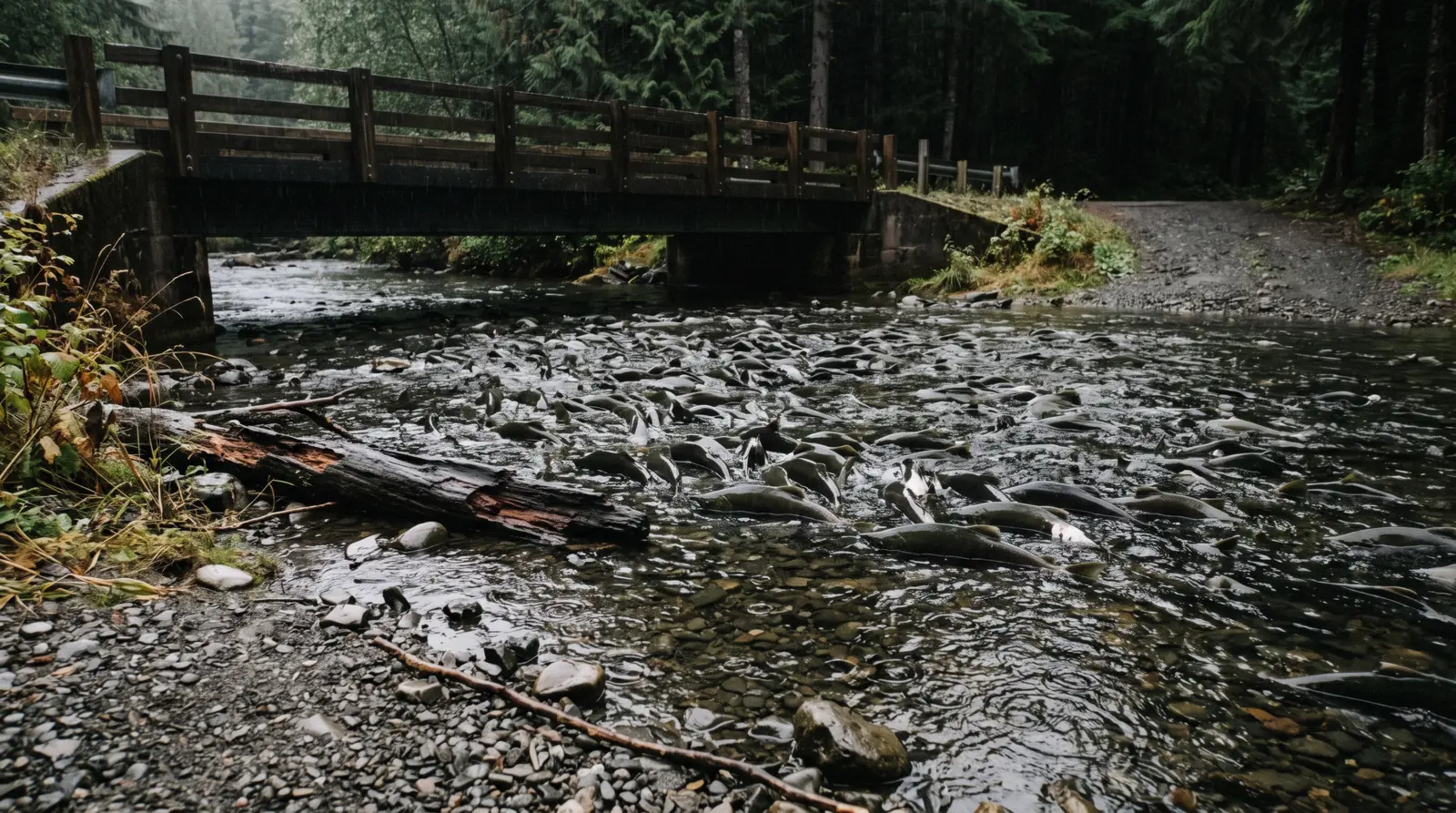
Herring Cove, Ketchikan: Where the South Road Ends
Herring Cove Ketchikan is where the south road ends, and stopping there costs nothing. herring Cove is the place where Ketchikan's road system simply stops, at the south end of South Tongass Highway. It is the farthest south point you can drive to in town, and it is free to stop at. Almost every wildlife tour out of Ketchikan passes through it, because the Alaska Rainforest Sanctuary operates here. Yet no Alaska Department of Fish and Game or US Forest Service page documents the cove by name as a wildlife-viewing site. This page separates the verifiable from the repeated. For the wider set of options, see things to do in Ketchikan. The town all of this sits in is the Ketchikan guide at the other end of the road.
Quick answer The honest status of Herring Cove and what it actually costs
Herring Cove is an informal place name on South Tongass Highway at the south end of Ketchikan, and the road ends there. No Alaska Department of Fish and Game or US Forest Service page lists it as a wildlife-viewing site, and the widely repeated salmon-viewing claim could not be traced to any official source. Stopping there is free according to secondary sources, though no official page confirms it. Two operators sell tours through the area: the Potlatch Totem Park and Herring Cove motor coach tour at $85.00, and the Alaska Rainforest Sanctuary walk from about $99.00 per adult. Neither venue publishes hours or admission prices on an official page, so treat any walk-up plan as unconfirmed. The practical way in is a booked tour, and our Ketchikan tours catalogue lists every option side by side.
Key takeaways
- No official agency documents Herring Cove as a viewing site, so read the cove's wildlife claims with caution or stick to the rainforest sanctuary page.
- Stopping at the cove costs nothing, which makes it one of the cheaper entries in our guide to Ketchikan costs.
- Reaching it without a tour means driving or riding the length of South Tongass Highway, so check getting around Ketchikan first.
- The cove sits far from downtown, so build the trip into a full plan with one day in Ketchikan.
Key facts
Opening hours
| Daily, all year, daylight |
|---|
Planning it
- Time needed
- Not stated. Our routing: one hour including the drive out
- Book ahead
- Optional — walk-up usually fine
- Address
- Not stated (informal place name on South Tongass Highway at the south end of Ketchikan)
The honest official row here points at the Alaska Department of Fish and Game viewing page that does NOT name Herring Cove. That is the finding: the state documents downtown Ketchikan Creek and does not document this cove by name, so the widely repeated salmon-viewing claim has no official source behind it. Stopping costs nothing either way.
It is free and it is on the way, so the only question is whether you build a trip around it or let a tour include it.
| Option | Price | Includes | Cancel | Book |
|---|---|---|---|---|
| Stop at the roadsideAnyone driving or bussing the south road. It costs nothing to stop. | Free | The bridge, the creek mouth, whatever is feeding | Nothing to cancel | Official site |
| From Potlatch Totem Park and Herring Cove TourA ship call that wants the wildlife stop without solving transport. | From $85 | Two and a half hours, the totem park and the cove | Free up to 24 hours before | Check Availability |
| Alaska Wildlife Waterfall ToursThe short version, if the call is tight. | From $117 | Ninety minutes, wildlife and waterfall | Free up to 24 hours before | Check Availability |
Every tour operator that passes this way describes bears and eagles here. No state or federal page we could find documents the cove by name, so we report what is claimed and by whom rather than repeating it as fact.
Tours that stop at Herring Cove
Four listings that include the cove on the south road. Prices, ratings and durations are the platform’s own figures.
 from $85
Free cancellation
from $85
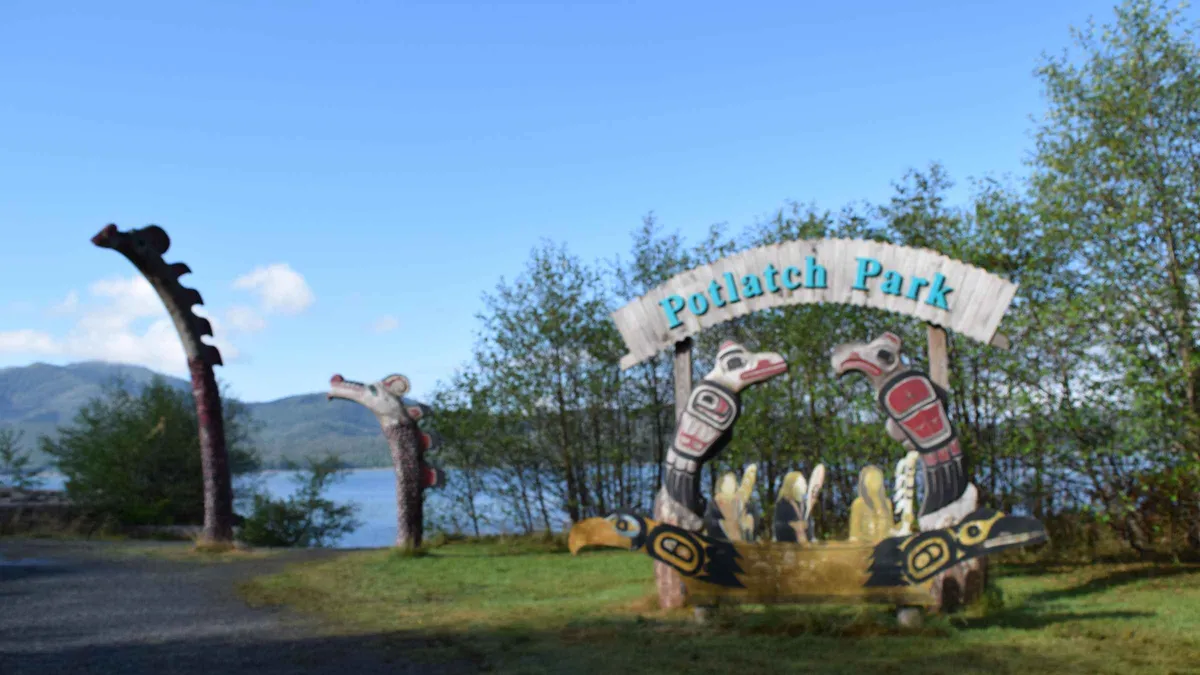
Free cancellation From Ketchikan: Potlatch Totem Park and Herring Cove Tour
This van tour combines a Potlatch Park visit, with its totem carving center and antique firearms display, with time at Herring Cove watching for bears, eagles and seals. A middle-ground pick for those wanting both carving history and a wildlife stop in one trip.
Check Availability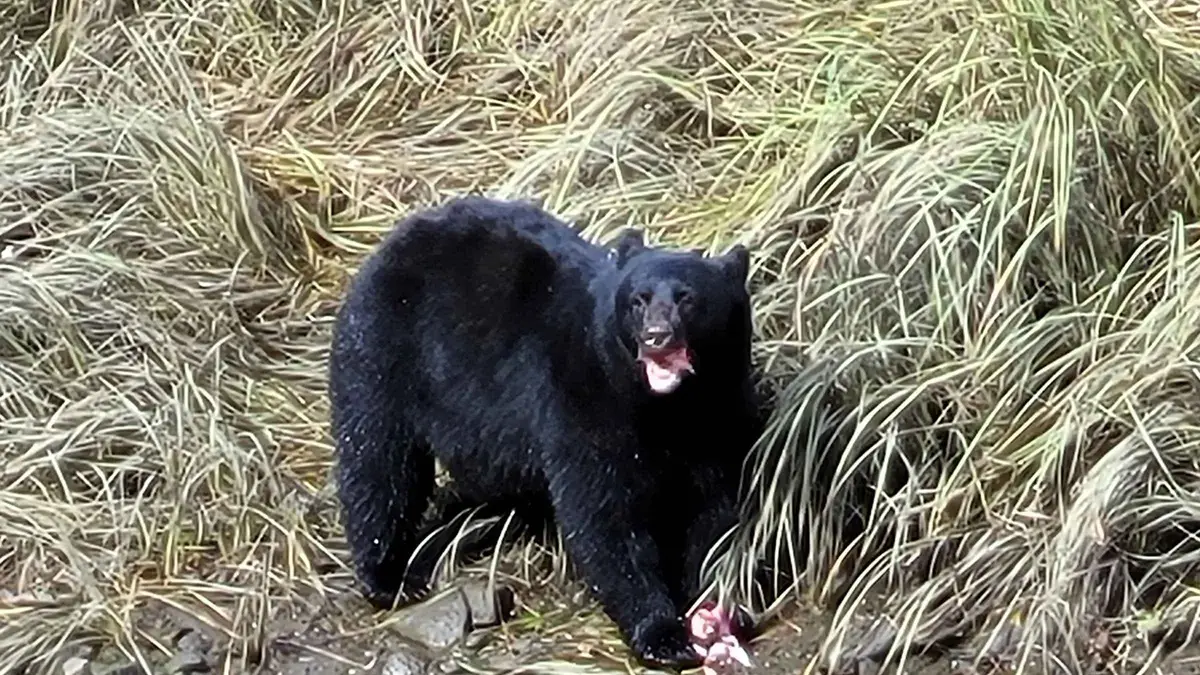 from $117
Free cancellation
from $117
Free cancellation Alaska Wildlife Waterfall Tours
Locally run vans take small groups to Rotary Beach for tide pools, then Herring Cove for bears and eagles, and a short waterfall at the South End. A budget, no-frills pick for visitors who want a quick wildlife loop without a boat or long hike.
Check Availability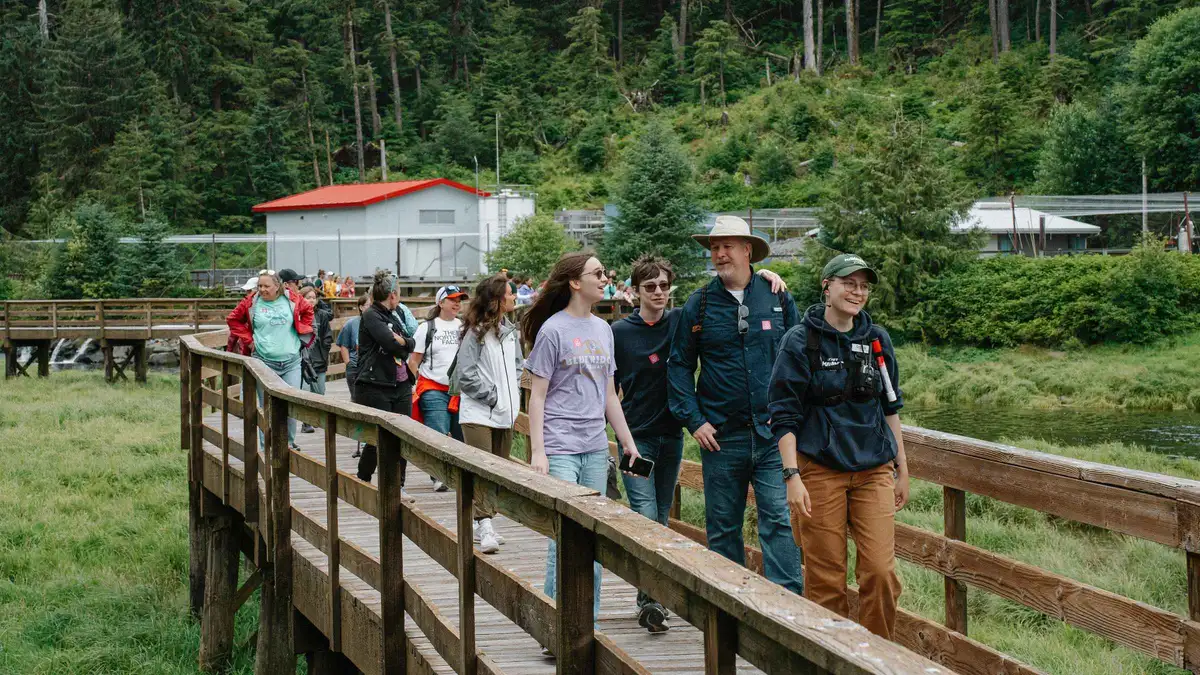 from $110
Free cancellation
from $110
Free cancellation Ketchikan: Alaska Rainforest Sanctuary and Totem Park Walk
A naturalist guide leads a walk through a private 40-acre rainforest reserve past an elevated boardwalk, a historic sawmill and a totem park, watching for eagles, bears and seals along Eagle Creek. Paced gently, so it suits most fitness levels rather than serious hikers.
Check Availability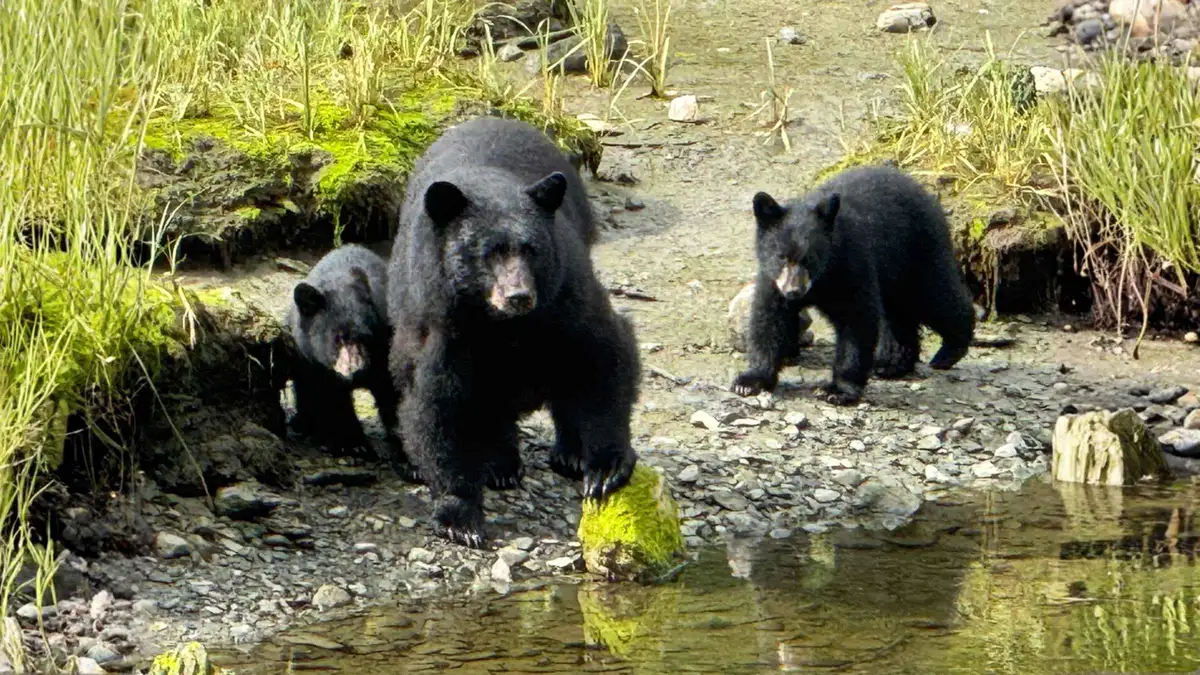 from $128.52
Free cancellation
from $128.52
Free cancellation Premium Rainforest Experience in Ketchikan
A van carries a small group, typically eight to ten people, into the Tongass National Forest to look for bears, eagles and salmon near waterfalls and spawning streams. Riders also get a digital port guide and texting support, useful for anyone new to Ketchikan.
Check AvailabilityPrices, ratings and details are the platform's own. dollar figures are the listed prices — the platform bills in your account's currency.
What Herring Cove actually is
Start with the one fact that separates Herring Cove from the other fifteen attractions in this guide: it has no official page. No Alaska Department of Fish and Game page names it. No US Forest Service page names it. The state's Ketchikan wildlife-viewing hub and its statewide fish-viewing publications do not list it among named viewing sites. When a tourism website tells you the salmon crowd into Herring Cove every summer, that claim cannot be traced to any government source. This guide treats it as unverified, and you should too.
What is verifiable is location and function. Herring Cove is an informal place name at the south end of South Tongass Highway, at the bottom of Ketchikan's small road system. The road ends there. Ketchikan is a road-limited community that is not connected to the continental highway system, and this cove is one of the two far points of what pavement exists, the northern counterpart being the Ward Cove area about seven miles north of downtown.
Function matters more than name. The Alaska Rainforest Sanctuary operates at Herring Cove, run by Kawanti Adventures on a 40-acre private preserve of temperate rainforest bordering the Tongass National Forest. That means every visitor who books the sanctuary's guided walk rides out here, and the Potlatch Totem Park and Herring Cove motor coach tour stops here as well. So the cove functions in practice as the southern terminus of Ketchikan's tour geography.
The cove itself is a small arm of salt water off the Behm Canal shoreline, ringed by the same steep rainforest that covers most of Revillagigedo Island. There is no staffed entrance, no visitor center, no published hours and no published fee for the roadside area. That combination, a real place with real tours and zero official documentation, is exactly why this page exists. Read what is confirmed, skip what is repeated, and decide whether the ride out is worth your limited hours in port.
What you actually see at Herring Cove
Be clear about what you are looking at before you book anything, because Herring Cove is a cove and a forest, not a built attraction. The centerpiece for most visitors is the Alaska Rainforest Sanctuary itself. Kawanti Adventures runs it on 40 acres of private temperate rainforest that borders the Tongass National Forest, which means you walk under mature spruce and hemlock on constructed paths through ground that gets some of the heaviest rainfall in the United States. Ketchikan's 1991-2020 climate normal is 149.54 inches of precipitation a year, and October alone averages 18.37 inches. The moss, the ferns and the saturated ground you see are a direct product of that number.
Wildlife is the reason tours come here, and honesty requires the same caution here as everywhere else on this page. Secondary sources and tour descriptions talk about eagles, deer and bears in the sanctuary, and the preserve is genuine rainforest habitat adjacent to federal land. But the specific claim that Herring Cove is an official salmon-run viewing site has no anchor in any Alaska Department of Fish and Game publication. The state's own fish-viewing documentation for Ketchikan centers on Ketchikan Creek downtown, where Chinook and coho salmon are the named species and the peak window is July and August. If seeing salmon is your priority, downtown offers the documented option and the cove offers the marketed one.
Physically, your visit probably looks like this. A motor coach or van brings you the full length of South Tongass Highway, roughly twenty to thirty minutes of riding past marinas and hillside houses. You step off at the sanctuary, join a guide, and walk a rainforest loop at a gradual pace. The Potlatch Totem Park and Herring Cove combination pairs that southern ride with a stop at the private totem park on North Tongass Highway, so you see carved poles as well as forest.
What you will not find is infrastructure. No boardwalk promenade, no fee booth, no ranger station. The cove is scenery and rides, and the value comes from the guide walking beside you rather than from anything built at the water's edge.
Hours, cost and the price-comparison picture
Here is the least glamorous section and the most useful one: the published facts are almost entirely negative.
Hours: not stated. No official page publishes opening hours for Herring Cove, because there is no staffed facility at the roadside cove itself. The Alaska Rainforest Sanctuary, which anchors the area, has no official walk-up price page on the operator's own site for this check. If you plan to arrive independently, call or message the operator before you commit.
Cost of the cove itself: stopping at Herring Cove is free, according to secondary sources describing public roadside access. No official page confirms or denies this, which is typical of a place with no managing agency. Compare that with the documented options nearby. Totem Bight State Historical Park charges a $5.00 per person day-use fee under the Alaska DNR fee schedule. The Southeast Alaska Discovery Center charges $5.00 per person from May through September, with children 15 and under free with an adult, and free admission October through April.
Tours, which is how nearly everyone arrives:
- Potlatch Totem Park and Herring Cove Tour, motor coach, 2.5 hours, $85.00, operated by Northern Tours LLC. - Alaska Rainforest Sanctuary and Totem Park Walk, van, 165 minutes, $110.00, operated by Kawanti Adventures. - Premium Rainforest Experience, van, 2.5 hours, $128.52. - Alaska Wildlife Waterfall Tours, high-top van, 1.5 hours, $117.00.
Season: the tour catalogue is built around the cruise season, which runs roughly May through September with the peak in June through August. Off-season visits are a different and largely undocumented proposition.
The bottom line for a price-comparison reader: the cove costs nothing, the tours cost $85.00 to $128.52, and the middle option of walking up to the sanctuary unbooked has no officially published price at all.
Getting to Herring Cove from the cruise berths
The four downtown cruise berths run south to north along the Ketchikan waterfront, and Herring Cove sits in the opposite direction, at the far south end of South Tongass Highway. Here is how the three usual options actually shake out.
On foot: not realistic. The distance from downtown to the end of the south road is a matter of miles along a highway shoulder, not a stroll. No official source publishes a walking figure for it, and no guide should pretend the walk is a sensible use of a port day. Creek Street, by contrast, is a downtown walk.
By public bus: possible in theory, undocumented in practice. Ketchikan Gateway Borough Transit charges a $2.00 adult fare per fixed-route ride, with youth and seniors at $1.00 and a $5.00 day pass. There is also a free downtown shuttle zone running from Bryant Street to the Coast Guard Base in summer. The catch is that no source in this guide's research confirms a transit stop at or near Herring Cove. Do not plan an independent visit around an unverified bus stop.
By booked tour: this is what works, and it is what the tour industry has already decided. The Potlatch Totem Park and Herring Cove tour at $85.00 and the Alaska Rainforest Sanctuary tours both include motor coach or van transport from the ship area. A few practical notes on the riding itself. Ketchikan's cruise ships dock at berths I through IV downtown, and a free shuttle also connects Ward Cove, seven miles north, to downtown Berth IV. Taxi and rideshare availability in Ketchikan is not confirmed on any official municipal page, so a cab to the cove is a gamble rather than a plan.
So the honest routing is: book the motor coach tour, or rent nothing and walk nothing, and accept that Herring Cove is a tour destination by design. That is not a flaw. It is just what a road-limited island town produces.
Herring Cove map: the end of the south road
The cove sits where the South Tongass Highway runs out. The other pins are the nearest places on this site.
Dos and don'ts at Herring Cove
Simple field rules for the end of the south road.
Do
- Book the $85.00 Potlatch Totem Park and Herring Cove tour rather than attempting the ride independently.
- Pack rain gear, since the area averages 149.54 inches of precipitation a year according to the Ketchikan weather normals.
- Balance the marketed salmon story against the documented downtown viewing on Ketchikan Creek.
- Check the rainforest sanctuary details before paying for any walk-up visit that has no published price.
Don't
- Don't plan to walk to the cove from the downtown berths, and don't assume an unverified bus stop exists.
- Don't repeat the official salmon-viewing claim, because no agency source supports it.
- Don't confuse Herring Cove with Ward Cove, which is seven miles north of downtown in the opposite direction.
- Don't skip the free stops nearby, like the boardwalk on Creek Street, if your tour leaves you hours to fill.
How long to give Herring Cove
Short ship call, four to six hours ashore: book the 2.5-hour Potlatch Totem Park and Herring Cove tour at $85.00 and let the motor coach do the work. That buys you the sanctuary area, the totem park, and a guaranteed return to the berth with time left for a quick walk along Creek Street, which is a free public boardwalk. It skips the deeper rainforest walk and anything downtown that needs more than an hour.
Full day in port: pair a morning rainforest tour with an afternoon downtown. The Alaska Rainforest Sanctuary walk runs 165 minutes at $110.00 and moves at a gradual pace, so it absorbs half a day comfortably once you count the ride out and back along South Tongass Highway. Back in town, spend the remaining hours at the Southeast Alaska Discovery Center, open 9:00am to 5:00pm daily in season with a $5.00 entrance fee, where the live underwater salmon camera shows the documented version of the salmon story. This routing skips the museums and the Deer Mountain Trail, which needs more time than a port day gives.
Second visit or a long independent stay: skip the tour entirely and rethink the destination. Without an official price, hours or access confirmation for the sanctuary, a self-guided visit to the cove is uncharted. A better use of a second day is the documented wildlife option, the flight to Neets Bay for black bears, or the Deer Mountain Trailhead for a hike on the 10.7-mile National Recreation Trail. Herring Cove rewards a first visit more than a second, because its main content, the rainforest walk, is a guided experience you do once. If rain shuts everything down, note that the sanctuary tours run rain or shine, which in a town with 232.6 measurable precipitation days a year is the only practical policy.
Five things most visitors do not know
- No Alaska Department of Fish and Game or US Forest Service page documents Herring Cove as a wildlife-viewing site, and the famous salmon-run claim cannot be traced to an official source. (ADFG and USFS, checked, no listing found) - The tourism claim tying Herring Cove to salmon viewing should be treated as unverified, while the officially documented downtown viewing site is Ketchikan Creek, with Chinook and coho salmon peaking July and August. (Alaska Department of Fish and Game) - The rainforest experience at the cove sits on a 40-acre private preserve bordering the Tongass National Forest, not on public land, which is why the operator and not an agency sets the terms.
(Kawanti Adventures) - Guided tour rates at the sanctuary start around $99 to $110 per adult and $55 per child according to secondary sources, but the operator's own site publishes no walk-up admission price. (Kawanti Adventures, price unconfirmed on official page) - Stopping at the cove itself is free per secondary sources, and no official page confirms any fee, hours or managing agency for the roadside area. (nobody publishes this)
Next
Alaska Rainforest Sanctuary
The private preserve at the same cove: the Rainforest Sanctuary.
The same waterGetting around
The $2.00 bus down the south road, and where it stops: getting around Ketchikan.
How to reach itHerring Cove questions
Is Herring Cove in Ketchikan free to visit?
Stopping at the roadside area is described as free by secondary sources, and no official page publishes a fee, an hours schedule or a managing agency for the cove itself. The costs begin when you book a tour. The motor coach combination tour is $85.00 and the rainforest sanctuary walk runs about $110.00 per adult. If a no-cost visit matters to you, compare the documented cheap options in our Ketchikan costs guide before deciding the ride south is worth it.
Can you see salmon at Herring Cove?
This is the claim to handle with care. No Alaska Department of Fish and Game page lists Herring Cove among its named viewing sites, and the widely repeated salmon-run story could not be traced to an official source. The state's documented Ketchikan viewing site is Ketchikan Creek downtown, where Chinook and coho salmon are the named species and the peak window is July and August. Treat the cove claim as unverified and plan around the documented option.
How do I get to Herring Cove from the Ketchikan cruise port?
By booked tour, in practice. The cove sits at the far south end of South Tongass Highway, miles from the downtown berths, which is not a walk. The borough bus charges a $2.00 adult fare on fixed routes, but no source confirms a stop at Herring Cove, and taxi and rideshare coverage is not confirmed on any official municipal page. The motor coach tours include the ride, which is why nearly every visitor arrives that way.
Is the Alaska Rainforest Sanctuary at Herring Cove worth it?
It is a genuine 40-acre private rainforest preserve bordering the Tongass National Forest, run by Kawanti Adventures, and its guided walk is rated 4.3 across 55 reviews in our catalogue. Worth depends on price honesty: the operator's own page publishes no walk-up rate, while secondary sources report about $99 to $110 per adult. Read our rainforest sanctuary page and compare it against the cheaper $85.00 motor coach option before booking.
What is Herring Cove like in the rain?
Wet, and operating anyway. Ketchikan averages 149.54 inches of precipitation a year, with measurable rain on about 232.6 days, so the rainforest is a product of the weather rather than a victim of it. The rainforest tours run rain or shine, though an operator may cancel in extremely bad conditions. Bring waterproof layers and footwear with grip, because the forest floor stays saturated through the season.
How much time should I plan for a Herring Cove tour?
Count on roughly three hours door to door. The Potlatch Totem Park and Herring Cove tour runs 2.5 hours of tour time, and the rainforest walk runs 165 minutes, to which you add the ride along South Tongass Highway and boarding time at the berth. That fits a standard cruise call with hours left for the free Creek Street boardwalk. A half day port call leaves less margin, so check the tour durations on our Ketchikan tours page.
Herring Cove on video
Three films that show this place at real pace, which is the check on every time figure above.
Best Things to Do in Ketchikan Alaska Travel Guide
Covers the south road and the cove.
Video: Destination Awaits11 Amazing Things You MUST Do in Ketchikan, Alaska
Shows the bridge and the water below it.
Video: Art We There Yet?What to Do in Ketchikan Alaska on a Cruise Port Day
Fits the stop into a ship call.
Video: Take2TravelLinked as published on YouTube. We have no connection to these channels.
We may earn a commission if you book through one of our links, at no extra cost to you. Full affiliate disclosure